
The Cabinet can take a decision on the matter only after the Election Commission's approval.

After registering a positive growth for two months, India's exports slipped into negative territory again, contracting 2.17 per cent year-on-year to $38.73 billion in May due to a fall in global petroleum prices, while trade deficit narrowed at $21.88 billion during the month.
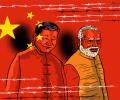
The bilateral trade between India and China has been growing at a healthy rate, but the trade gap remains sharply tilted in Beijing's favour. India has time and again flagged its concern over the ballooning trade deficit and the non-trade barriers faced by Indian goods in the Chinese market.

CBI has also summoned a senior official of Reliance Industries Limited and a noted chartered accountant.

'Where rostering systems are automated and duty time software interfaces directly with DGCA, the assertion that they suddenly discovered crew shortages is simply implausible.' 'If adequate crew planning hasn't materialised within 12 to 24 months from inception, how will 45 days -- from December 5 to February 12 -- suddenly resolve matters?'

Also, as part of the IDY celebrations, entry to all ASI sites will be "free of cost" for the public on June 21, the ministry of culture said in a statement on Friday.

Govt's e-commerce portal asks sellers to specify country origin of products. Now, the commerce & industry ministry has mandated that the Government e-Marketplace, which has seen Rs 55,048 crore worth of transactions till now, adopt this approach in the interest of creating an 'Aatmanirbhar Bharat'.

The Jan Vishwas (Amendment of Provisions) Bill 2025, aimed at decriminalizing minor offenses to promote ease of living and business, was introduced in the Lok Sabha and referred to a Select Committee.


India will take all necessary steps to safeguard and promote national interest, Commerce and Industry Minister Piyush Goyal said on Thursday, a day after US President Donald Trump announced 25 per cent tariffs plus penalty on domestic exports to America from August 1.

An Indian commerce ministry team will soon visit Washington for another round of talks on the proposed trade agreement with the US to iron out differences in sectors, like agriculture and automobiles, a government official said on Thursday.

'We remain in touch with the Chinese side, in Beijing as well as in Delhi, to bring predictability in the supply chain.'

Contracting for the eighth consecutive month, the output of eight core infrastructure sectors dropped by 2.5 per cent in October, mainly due to decline in production of crude oil, natural gas, refinery products and steel. The production of eight core sectors had contracted 5.5 per cent in October 2019, data released by the Commerce and Industry Ministry showed on Friday.

The wholesale price inflation rose to 1.84 per cent in September as food items, especially vegetables, turned costlier, as per the government data released on Monday. The wholesale price index (WPI)-based inflation was 1.31 per cent in August. It was (-)0.07 per cent in September last year.

An Indian commerce ministry team has reached Washington for another round of talks from Monday on the proposed bilateral trade agreement (BTA), an official said. Chief negotiator of India and special secretary in the Department of Commerce, Rajesh Agrawal, will join the team on Wednesday.

The CII Business Summit 2025's inaugural session witnessed a rousing standing ovation and a felicitation ceremony for the defence top brass sending a strong message about India's rising military industrial complex and hghlghting that security is a top-of-the-mind issue for India Inc.

New-age stocks to buy: Most new-age stocks have turned out to be wealth destroyers in stock markets, so far, in calendar year 2025. Shares of Ola Electric Mobility, for instance, have plunged nearly 50 per cent in the first half of CY 2025, while those of Swiggy, PB Fintech, Paytm, and Eternal (Zomato) have crashed between 6 per cent and 25 per cent, ACE Equity data shows.

The "weaponisation" of economic activity - through tariffs and sanctions - is now a reality, with countries leveraging these tools strategically, External Affairs Minister S Jaishankar said at the Raisina Dialogue recently.

'We have created massive infrastructure in the past six years.'

The government is set to examine concerns over quick commerce companies potentially undermining businesses of local kirana stores, particularly in the context of the draft Digital Competition Bill, according to official sources. The Ministry of Consumer Affairs recently raised the issue with the Ministry of Corporate Affairs during discussions around the proposed legislation. "We need to assess if and how the Bill can address these concerns and explore further steps to include provisions to keep a check," a senior official stated.

Government's decision comes in the backdrop of several complaints being flagged by domestic traders on heavy discounts being given by e-commerce players to consumers.

Fast-moving consumer goods (FMCG) distributors' association has written to the finance ministry, highlighting concern over fund utilisation and fund accumulation by quick commerce companies and deep discounting of goods on their platforms. According to a recent letter seen by Business Standard, All India Consumer Products Distributors Federation (AICPDF) noted that its analysis indicated that approximately 80 per cent of these funds were directed toward customer acquisition strategies instead of creating cutting-edge innovations or sustainable growth models for the retail sector.
The commerce ministry has proposed a three-year extension of tax benefits given to Export-oriented Units in an attempt to encourage export industries at a time when global demand is expected to slump further.

Digipin promises to revolutionise location-based services in India with safeguards.
Communication channels between India and the US are open to resolve the ongoing tariff issues, and the glitch in trade ties is only temporary, given the long-term relationship between the two nations, government sources said on Wednesday. The US' 50 per cent tariffs on Indian exports to America came into effect from August 27, barring a few sectors.

The commerce ministry is working on different scenarios to assess the possible fallout of reciprocal tariffs to be imposed by the US administration on April 2 on its key trading partners including India, sources said. US President Donald Trump has said that April 2 will be 'Liberation Day' as he plans to announce tariffs or import duties to bring down America's trade deficit, and promote the country's manufacturing.

Sector analysts in India feel that the new convention may not lead to a significant increase in the number of Indian employees being sent to the UK.

The 17 rare earth elements that are at the centre of the current crisis are critical components of everyday products -- from cars to jet engines to electronics like smartphones and flat-screen TVs.

A government official said India and the US are exploring an interim trade deal within 90 days.

Barring coal, electricity and steel, all sectors -- crude oil, natural gas, refinery products, fertiliser and cement -- recorded negative growth in September 2020.

The output of eight core infrastructure sectors grew marginally by 0.1 per cent in January, mainly due to growth in the production of fertiliser, steel and electricity. The core sectors had expanded by 2.2 per cent in January 2020, according to the provisional data released by the commerce and industry ministry on Friday. Coal, crude oil, natural gas, refinery products, and cement recorded negative growth in January.

Amid the ongoing global tariff war, Commerce and Industry Minister Piyush Goyal on Wednesday asked exporters not to panic and assured them that India is working on the "right mix and right balance" in its proposed trade agreement with the US.
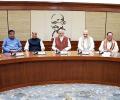
Among the new entrants to the Union cabinet, former Madhya Pradesh chief minister Shivraj Singh Chouhan has been given the agriculture and rural development portfolios, Bharatiya Janata Party president J P Nadda the health portfolio and former Haryana chief minister Manohar Lal Khattar the power portfolio.
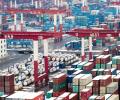
India's trade deficit with China neared $100 billion in FY25, amid escalating concerns of dumping, data released by the commerce department on Wednesday showed. Chinese imports rose by 11.5 per cent to $113.45 billion, while outbound shipments to the neighbouring country saw 14.5 per cent contraction to $14.2 billion.

The Indian exporting community is "very" concerned about the possible reciprocal tariffs of the US as it could severely hurt MSME shipments to America in the short run, Federation of Indian Export Organisations President SC Ralhan said on Wednesday. He suggested that the government should come forward and support exporters to deal with these tariffs.

India and the US have decided to hold sector-specific talks in the coming weeks to finalise the structure of the proposed bilateral trade agreement (BTA), the government said on Saturday. The engagement between the two countries came in the backdrop of the USA's threat to impose reciprocal tariffs on its key trading partners, including India, on April 2.

Barring fertiliser, all seven sectors - coal, crude oil, natural gas, refinery products, steel, cement, and electricity - had recorded negative growth in May.

The department of personnel and training has asked the Union Public Service Commission to recruit such specialists through "lateral entry" mode in 12 government departments/ministries, he said.

The production of eight infrastructure sectors rose by 7.5 per cent in October on healthy performance by the segments of coal, natural gas, refinery products and cement, official data released on Tuesday showed. The output of eight core sectors of coal, crude oil, natural gas, refinery products, fertilisers, steel, cement and electricity had contracted by 0.5 per cent in October 2020, according to the data released by the commerce and industry ministry. Core sectors' growth stood at 4.5 per cent in September this year.
The output of eight core sectors jumped by 56.1 per cent in April mainly due to a low base effect and uptick in production of natural gas, refinery products, steel, cement and electricity, official data released on Monday showed. The eight infrastructure sectors of coal, crude oil, natural gas, refinery products, fertilisers, steel, cement and electricity had contracted by 37.9 per cent in April 2020 due to lockdown restrictions imposed to control the spread of coronavirus infection. In March this year, the eight sectors had recorded a growth rate of 11.4 per cent.
